

Training for the Effective Immigration Advocate
December 9 – 20, 2024
8-15 participants
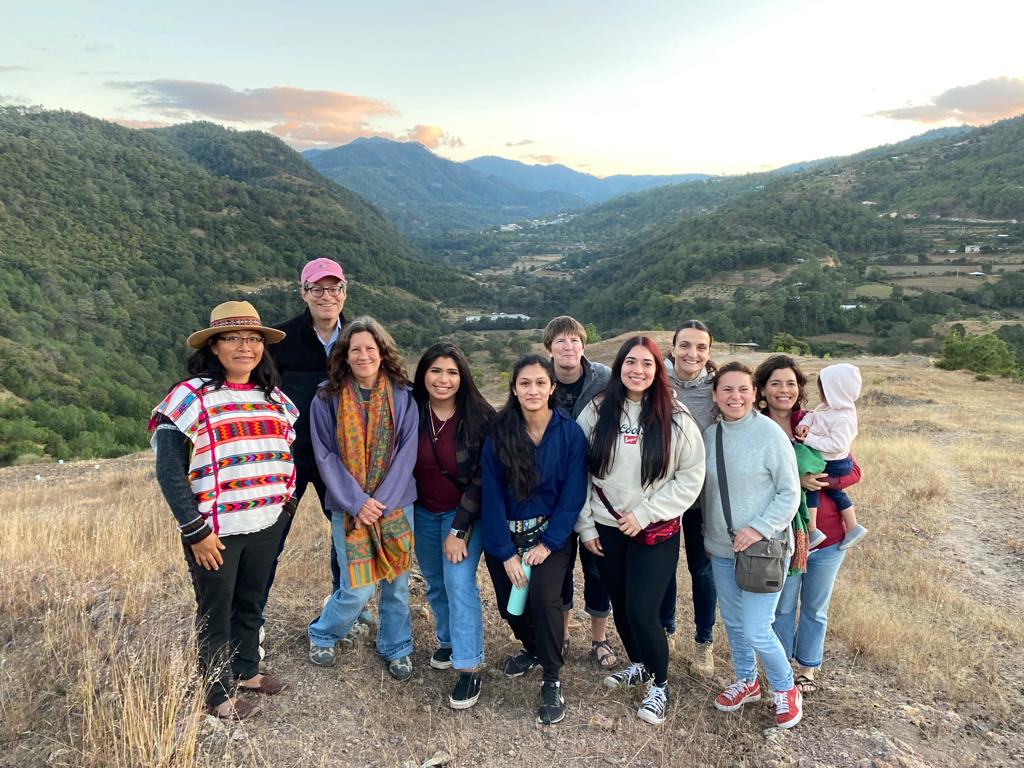
We are happy to announce our eleventh immigration advocate training in partnership with the non-profit MANOS: Migrantes Apoyados, No Olvidados. This training is a two-week program in Oaxaca, Mexico, with an emphasis on enhancing intercultural awareness through learning opportunities with community leaders, human rights defenders, lawyers, and language teachers. We have found that through this dynamic combination of seminars and visits to local communities, U.S.-based advocates who work for and with immigrant communities learn how to better support, assist, and learn from the people they serve who come from different cultural and linguistic backgrounds. All profits from this training go to support the work of MANOS to offer free legal services to Oaxacan migrants, to families of “disappeared” migrants, and to refugees. MANOS is a non-profit that operates 100% independently of any organization or government agency all funding comes from the participants in this program! Visit the MANOS website at www.manosoaxaca.org to learn more.
Because all profits go to support 100% of the operating budget of MANOS, we do not offer scholarships.
LANGUAGE CLASSES
Participants will receive 20 hours of language classes in small groups. Each session will be 2 to 4 hours with a break.
Spanish (intermediate and advanced) Participants will attend Spanish classes with an emphasis on interviewing and communication skills in the immigration advocacy context. There will be at least two levels available: intermediate and advanced (levels will be further separated depending on the assessments made by the language teachers). If you have questions about your level, please feel free to indicate that in your application below.
Beginner Zapotec Participants will attend Zapotec classes. Fluent speakers of English and Spanish are encouraged to participate in this class. These classes will be focused on giving students a solid base in Zapotec.
CONTENT SEMINARS AND EXCURSIONS
There will be eight seminars (between 2 and 4 hours), as well as two day trips to Cuajimoloyas and Santo Tomas Jalieza. We will meet with and hear from community leaders and, under their guidance, learn about their traditions, system of self-governance, and the effect migration has had on their communities. Participants will enhance their understanding of migration from and through Mexico as well as the sociocultural elements that can impact communication processes between individuals with different languages, cultures, and communication patterns. These seminars are broken down into the four themes we normally cover in our trainings. Please see the link above to see the general calendar (subject to minor changes) and to read more about the individuals you will be meeting in these seminars.
Languages and Cultures in Mexico: Issues of Power, Class, and Ethnicity
Oaxaca in the Face of Neocolonial Practices: Learn about Oaxaca’s linguistic and cultural diversity from a perspective that criticizes neocolonial practices. This talk will address the social, economic, and political factors that have shaped the current state of Oaxacan society, its Indigenous communities, and their territories. Learn about key social movements in southern Mexico that have motivated people to organize and resist transnational corporations and federal policies created to weaken organized Indigenous communities.
Ways of Understanding, Communicating, and Resisting in Los Pueblos Originarios
Land Defense Migration to the United States because of forced displacement is one of the many reasons people from Latin America lose their connection to their land and community. This displacement often happens because of transnational corporations exploiting the natural resources of Indigenous territories. Extractavist and contaminating projects like mining, wind turbines, logging, damning, and extraction of groundwater have been and are widespread in Mexico. We will hear from community activists about how they are resisting and defending their land in spite of state violence and oppression.
Indigenous Organization, Community Work, and “Usos y Costumbres” in Oaxaca
Indigenous peoples are often described from the outside and through knowledge frameworks constructed from the Western experience. These frameworks include concepts of “underdevelopment,” “social organization,” and “poverty” and are used to explain why Indigenous communities around the globe continue to need “help” from their governments. Rarely discussed are the Indigenous social practices and forms of organization that have historically served to maintain their social identity, protect and preserve their land, and conserve their traditions and festivities. Beatriz González, professor with at Universidad Autónoma Comunal de Oaxaca will be discussing the social and cultural practices, “usos y costumbres,” still present in los pueblos originarios.
Indigenous Women in Contemporary Mexico
This seminar will be a conversation with Angelica Morales Santiago, a linguistics professor, Mixteco language instructor, and community leader. Participants will learn about Indigenous identities, forms of local organization, linguistic prejudices, and the subtle forms of oppression that shape the daily experiences of Indigenous women in contemporary Mexico.
Healing through Traditional Practices In this discussion, participants will learn strategies and tools to support themselves and others in moments of crisis, utilizing traditional healing practices. This seminar will happen before our day trip to Cuamjimoloyas, where we will enrich our understanding of traditional medicinal plants on a hike in the Sierra Norte of Oaxaca.
Strategies for Successful Intercultural Communication Processes
Improving Intercultural Communication: These seminars will focus on how we can reflect on what we have learned from our own experiences and translate them into actual and real changes in how we communicate, verbally and non-verbally, in the immigration advocacy context. Several of the organizers of the course will lead this debrief session.
Language Courses: Spanish language classes will include information on interviewing skills and communication strategies.
Immigration Policy, Law, and Practice
Desaparecidos, No Olvidados: The seminar will explain why there are so many “disappeared” migrants and why this is a humanitarian crisis that is largely ignored in Mexico and the United States. Co-founder of MANOS, Nancy Garcia, will be leading this discussion and explaining the numerous obstacles to justice thousands of families face, the official policies and corruption that drive this crisis, and the steps she and other advocates are taking to confront this problem.
Seeking Safety in Mexico: The discussion will be focused on understanding the routes that are taken by migrants in transit who are passing through Mexico and heading to the U.S. border, the hardships that many confront during the journey to the northern border, as well as the asylum process available here in Mexico. Learn how local defenders, communities, and the Mexican government are facing new challenges and increasing pressure from the United States. Co-founder of MANOS, Florence Weinberg, will be leading this discussion.
Testimonials from our past participants…
“Having been in so many different places to observe firsthand and, more importantly, to be with people and hear their stories and in their own words how they experience their daily life and interpret historical events cannot be replicated or gained in the way that it was through any amount of research, reading or watching videos/documentaries.
– Amy Tice – Licensed Clinical Counselor and Professor
“I loved every day and each speaker / activity. I would definitely recommend it to all advocates, whether it be social worker, lawyer, paralegal, etc. The highlight was getting the opportunity to speak as a group and individually with different people over the two weeks whether in presentations or informal conversations. Having a chance to step back, slow down, and speak / listen thoughtfully and purposefully with the different community members was enlightening to me.”
-Marisa Caño-Carey – Bronx Defenders
“A life changing experience. I went into the experience thinking it was going to be something very formal and just something to “add to my resume”, but it was much more than that and I’m glad it was. I appreciate how intentional every component of the program was and the safe space that was created thanks to the professors and staff. If I could experience it for the first time more than once, I would.” Esmeralda Luna – Baker Ripley – Citizenship and Immigration Program
If you are on DACA and are able to get advance parole, please please go to this training. Borders are made up, migration is part of all of our histories, it is natural and it is beautiful, this program affirmed all of this. This program gave me life, hope and fuel.
-Gloria Mendoza – UFW Immigration Justice Organizer
“Do yourself and the people you serve a favor and take this course. You will come away with a heightened awareness of the migrant’s journey and an enhanced feeling of connectedness – to migrants and to other advocates.” -Lorri Haden – Retired Attorney Volunteer Catholic Charities
“The entire course was really well put together. I enjoyed the small language group because it made it easier and less intimidating to practice Zapoteco, which was a brand-new language for me. It was vital to have the cultural aspect and the language component, now I see why.”
-Magnolia Zarraga – Immigration Attorney
“I enjoyed it tremendously. I have so much to learn from the instructors, from the Oaxacan culture and history, and from other students in the class. I highly recommend the program to anyone who wishes to improve their communication skills… It was a real privilege to step out of the fray in the U.S. and learn about such critical issues as the role that power can play in interviews with non- citizens in the U.S., the importance of understanding where a person is coming from, and the value of being vulnerable.” -Katie Shepherd – American Immigration Council / Immigration Justice Campaign
“I am so glad that I opted for this program instead of traditional Spanish classes. Because of the innovative partnership between Ollin and MANOS, I was able to improve all aspects of my transnational communication skills. I am so grateful for everything I learned and encourage all immigration advocates to participate in the program!”
-Else Drooff – Santa Fe Dreamers
“This program provided me with a nuanced perspective of migration that will definitely inform my work for years to come.” -Erin Thorn Vela – Texas Civil Rights Project
“I learned a lot more about listening and the importance of place and space in identity formation…I feel like my Spanish improved, the classes were relevant to the skill we are trying to build, and they gave us an opportunity to practice what we learned with role play and dialogue.”
-Kristina Campbell – UDC David A Clarke School of Law
“It was full, comprehensive, well-thought-out and deeply inspiring. My general awareness of cultural norms and the need to be sensitive to differences was increased by exposure to indigenous norms of some of the groups in Oaxaca, and in general a less direct style of interacting. There was a well-rounded selection of presenters for an inclusive exposure to immigration/refugee issues as applicable to advocates.”
-Mateo Narayan-Hari Gwin – Volunteer Attorney
“I realize now that our connections to the people we meet in our work extend far beyond our use of words. In many ways this is secondary to realizing one another as complex individuals. I have a much better sense of the ways people interact. Having our own sense of power and “correctness” / normative concepts challenged was very useful.”
-Tess Kursel – Santa Fe Dreamers
“Although we were immersed in Oaxacan culture, I feel I can apply my experiences / learnings to communicating with people from other cultural backgrounds. I have a new framework for conversations based on love, respect, historical and cultural differences.” -Jan Nelson Meslin – Freedom for Immigrants
“The connection of la cultura y comunidad is going to impact how I do my work. Specifically, I have a more global perspective on immigration and the people who leave and why.”
-Julia Garza-Withers – Showing Up for Racial Justice
To apply
We encourage those who are passionate about learning through participation and creating a community to join us. Please review the options given below and fill out the application at the bottom of this page so we can make sure the training is a good fit for everyone. We will then send you instructions as to how to register once you are accepted.
We ask that participants have a minimal proficiency (low intermediate) level of Spanish as most of the sessions will be in Spanish. Also, we want to mention that while a couple seminars may include discussion of legal topics, you do not, by any means, have to be an attorney to apply – this course is for all advocates.
Costs Per Person for Two-Week Course
December 9-20, 2024
- Content Seminars + Language Classes + Homestay (13 nights) w/ two meals: $2,950 USD
- Content Seminars + Language Classes + Hotel Room (13 nights): $3,650
- Content Seminars + Language Classes (training only, no lodging): $2,430
Cost Includes:
- A welcome session for all participants for us to learn more about each other and to receive an introduction to the course.
20 hours of intensive language classes in small groups tailored to the work of immigration advocates. Language evaluations will be conducted before the training so that we can place you in the most appropriate level. - Eights seminars with an overall goal of improving intercultural communication. Participants will enhance their understanding of the different sociocultural elements that can impact communication processes between individuals with different languages, cultures, and communication patterns.
- Two day trips, to Cuajimoloyas and Santo Tomas Jalieza in private transportation.
- A temazcal (sweat lodge) ceremony (gentle, with the option to leave) with a light dinner included.
- Two group meals, one in Cuajimoloyas, and one in Santo Tomas Jalieza.
- Access fees and guide services to Monte Alban and in Cuajimoloyas
- Medicinal plant hike and cooking class in Cuajimoloyas.
- Support from Ollin staff in the event of sickness and/or emergency
- A certificate of completion from Ollin Tlahtoalli.